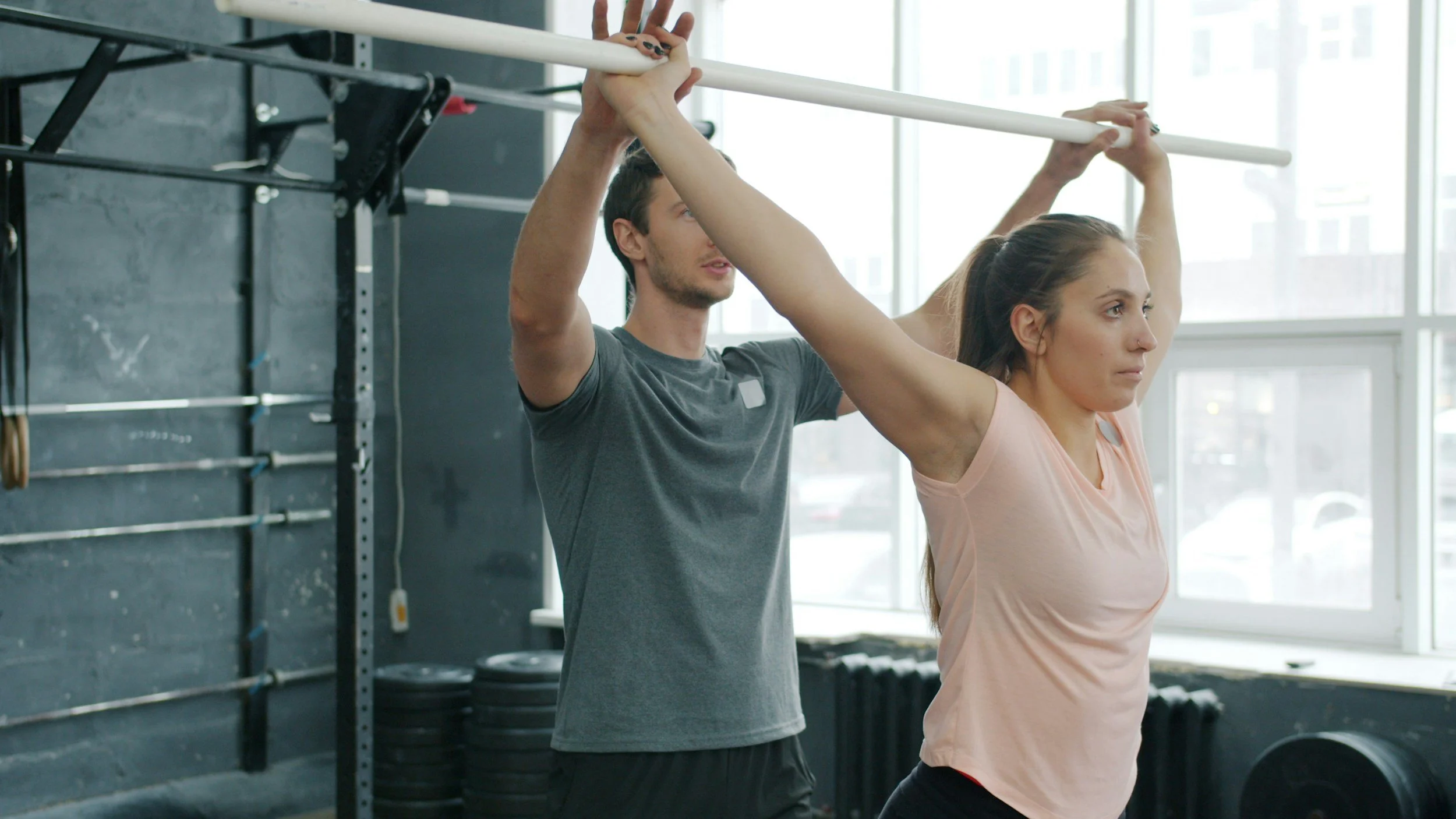
Shoulder pain/rotator cuff tears/labrum tears
Shoulder Pain Doesn't Mean You Have to Stop Doing What You Love.
DOES THIS SOUND LIKE YOU?
Pain when reaching overhead
Shoulder pain during bench press, push-ups, or overhead lifts
A sharp pinch when lifting your arm
Pain when sleeping on your side
Your shoulder feels weak, unstable, or stiff
You've tried rest, stretching, or treatment, but it keeps coming back
If that sounds familiar—you're in the right place.
WHY YOUR SHOULDER KEEPS HURTING
Most shoulder pain isn't caused just by a tear or weakness.
It's usually a problem with how the entire system is working together.
Your shoulder depends on:
Good shoulder blade movement
Adequate upper back mobility
Rotator cuff strength and control
The ability to handle the demands you're placing on it
When one piece falls behind, the shoulder often starts picking up the slack.
That's when pain tends to show up.
The shoulder rarely fails alone—it usually loses support from the areas around it first.
COMMON SHOULDER CONDITIONS WE HELP WITH
Shoulder impingement
Rotator cuff tears
Labrum tears
Tendinitis and tendinopathy
Pain with overhead lifting
Sports-related shoulder pain
General shoulder stiffness and mobility restrictions
WHY IT KEEPS COMING BACK
Many people focus only on reducing pain.
But if strength, mobility, and movement control aren't addressed, the problem often returns.
That's why people get stuck in cycles like:
Rest → feel better → return to activity → pain returns
Temporary relief but no lasting change
Avoiding movements they used to enjoy
We're not trying to simply make your shoulder feel better.
We're trying to help it tolerate the demands of your life again.
HOW WE APPROACH SHOULDER PAIN AT KINETIX
We don't just treat the shoulder.
We evaluate the entire movement system.
1. Find the real driver
We assess shoulder motion, shoulder blade control, upper back mobility, strength, and movement patterns to determine what's actually contributing to your symptoms.
2. Calm things down
Hands-on care and targeted mobility work help reduce irritation and improve movement quality.
3. Rebuild capacity
We use progressive strength and corrective exercises to improve how your shoulder handles load.
4. Return to what you actually do
Whether it's CrossFit, weightlifting, golf, pickleball, work, or simply reaching into a cabinet without pain, the goal is getting you back to doing it confidently.
A DIFFERENT WAY TO THINK ABOUT SHOULDER PAIN
Pain doesn't always mean damage.
Many shoulder issues develop because the joint is being asked to do more than it's currently prepared to handle.
The solution isn't always rest.
Often, it's improving your body's ability to manage the demands you're placing on it.
If shoulder pain is limiting how you train, work, or live, it's time to figure out why.
Let's identify what's actually driving your symptoms and build a plan to get you back to doing what you love.