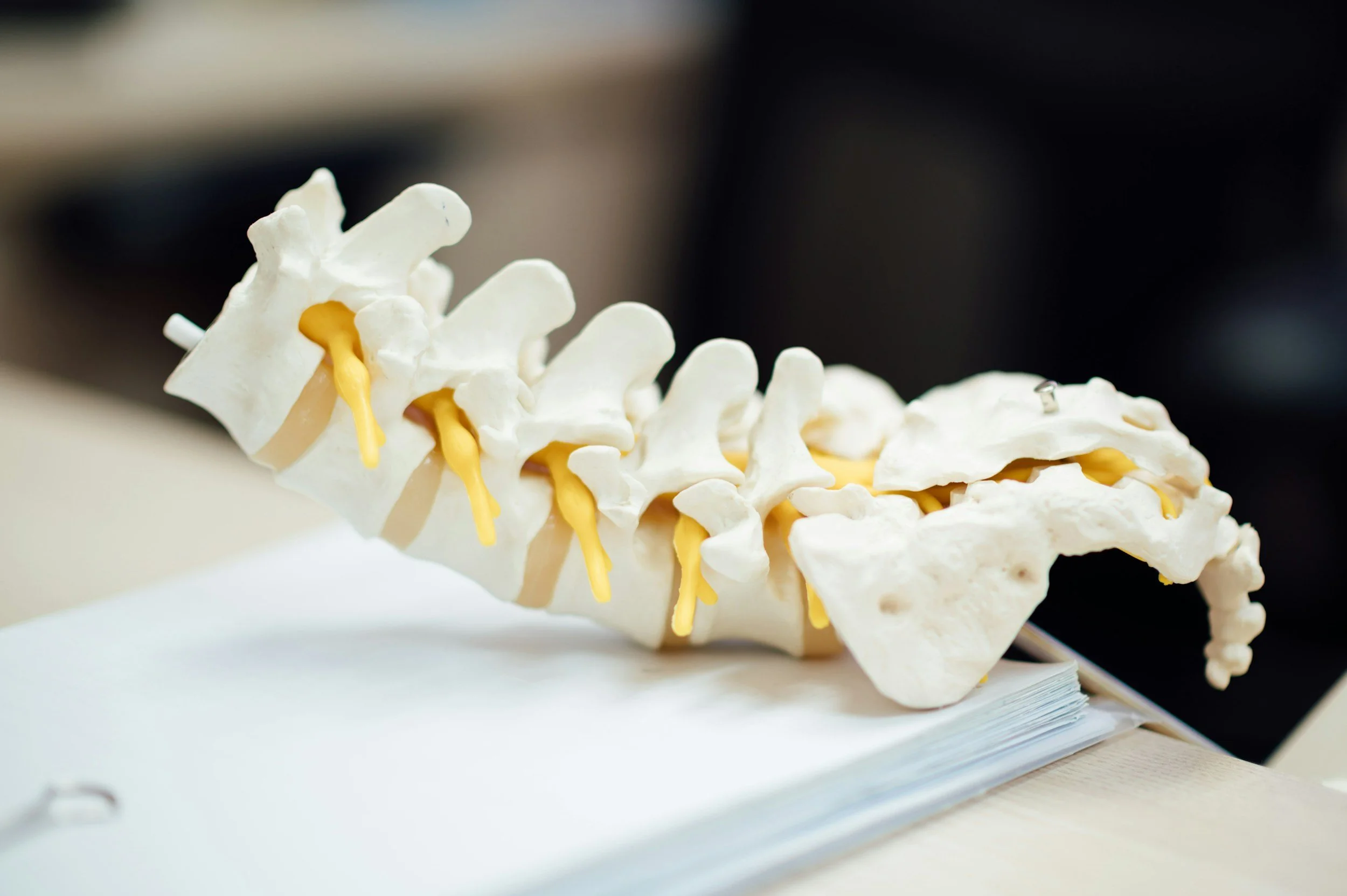
Disc Herniations/bulges/”slipped discs”
A Disc Herniation Doesn't Automatically Mean Surgery.
If you've been told you have a bulging disc, herniated disc, or disc injury, you're probably wondering what comes next.
At Kinetix Chiropractic in Sanford, we help active people recover from disc-related back pain and get back to the activities they enjoy through a structured rehab approach—not fear-based recommendations.
DOES THIS SOUND LIKE YOU?
You've been told you have a bulging or herniated disc
Back pain is limiting how you move, work, or exercise
Bending forward makes symptoms worse
Pain travels into your glute or leg
Sitting for long periods is uncomfortable
You've been told to "just rest" but nothing seems to be improving
WHAT IS A DISC HERNIATION?
Your spinal discs act like cushions between the bones of your spine.
A disc herniation occurs when part of that disc pushes beyond its normal boundaries and becomes irritated or sensitive.
Here's the important part:
Many people have disc bulges or herniations and never experience pain.
The MRI finding is only one piece of the puzzle.
What matters most is how your body is moving, loading, and responding to that injury.
WHY IT'S HAPPENING
A disc herniation is often less about one bad movement and more about repeated stress over time.
Common drivers we see:
Repeated bending and lifting without adequate capacity
Sudden spikes in activity or training volume
Poor tolerance to prolonged sitting
Previous back injuries that never fully recovered
Strength and movement deficits that increase stress on the spine
Pain shows up when the demands placed on your body exceed what it's currently prepared to handle.
WHY IT KEEPS COMING BACK
Many people focus solely on the MRI finding.
But treating the image isn't the same as treating the person.
That's why people get stuck in cycles like:
Symptoms improve, then return during normal activities
Avoiding movement out of fear
Constantly searching for the "one thing" that will fix it
A disc can become less sensitive over time.
But your body also needs to rebuild the strength, confidence, and capacity to handle life again.
HOW WE APPROACH DISC HERNIATIONS AT KINETIX
We don't just look at the MRI.
We look at how you move.
1. Find the real driver
Assess movement, strength, load tolerance, and symptom behavior to understand what's actually contributing to the problem.
2. Calm things down
Hands-on care and targeted movement strategies to reduce irritation and improve comfort.
3. Rebuild capacity
Progressive strength and movement work to improve your spine's ability to tolerate bending, lifting, sitting, and daily activity.
4. Return to what you actually do
Work, exercise, parenting, travel, and the activities that matter to you—without constantly worrying about your back.
A DIFFERENT WAY TO THINK ABOUT DISC HERNIATIONS
A disc herniation is not a life sentence.
In many cases, the goal isn't to avoid movement.
The goal is to gradually rebuild your body's ability to tolerate it.
The spine is designed to move, adapt, and become stronger when given the right inputs.
If you've been diagnosed with a disc herniation and aren't sure what to do next, let's start by understanding what's actually driving your symptoms.
We'll build a plan focused on getting you back to moving confidently again.